AI-powered robots are turbo‑charging recycling plants
At COP31 in Türkiye, world leaders highlighted zero‑waste goals while NVIDIA announced four startups that are already putting AI on the recycling line. The moves could change how creators and small businesses source recycled material.
AIRECO’s fine‑grained plastic sorting
Taiwan’s AIRECO is using NVIDIA Jetson Orin NX modules to run vision AI on a pilot line in Tainan. The system spots individual plastic items on a conveyor and directs robotic arms to pick them out, achieving over 95 % recognition accuracy. Founder Chun‑Feng Liu says the finer the sort, the more likely a bottle can be recycled back into a bottle.
A full production line slated for next year aims to lift capacity from 18,000 to 48,000 tons and cut operating costs by 85 %.
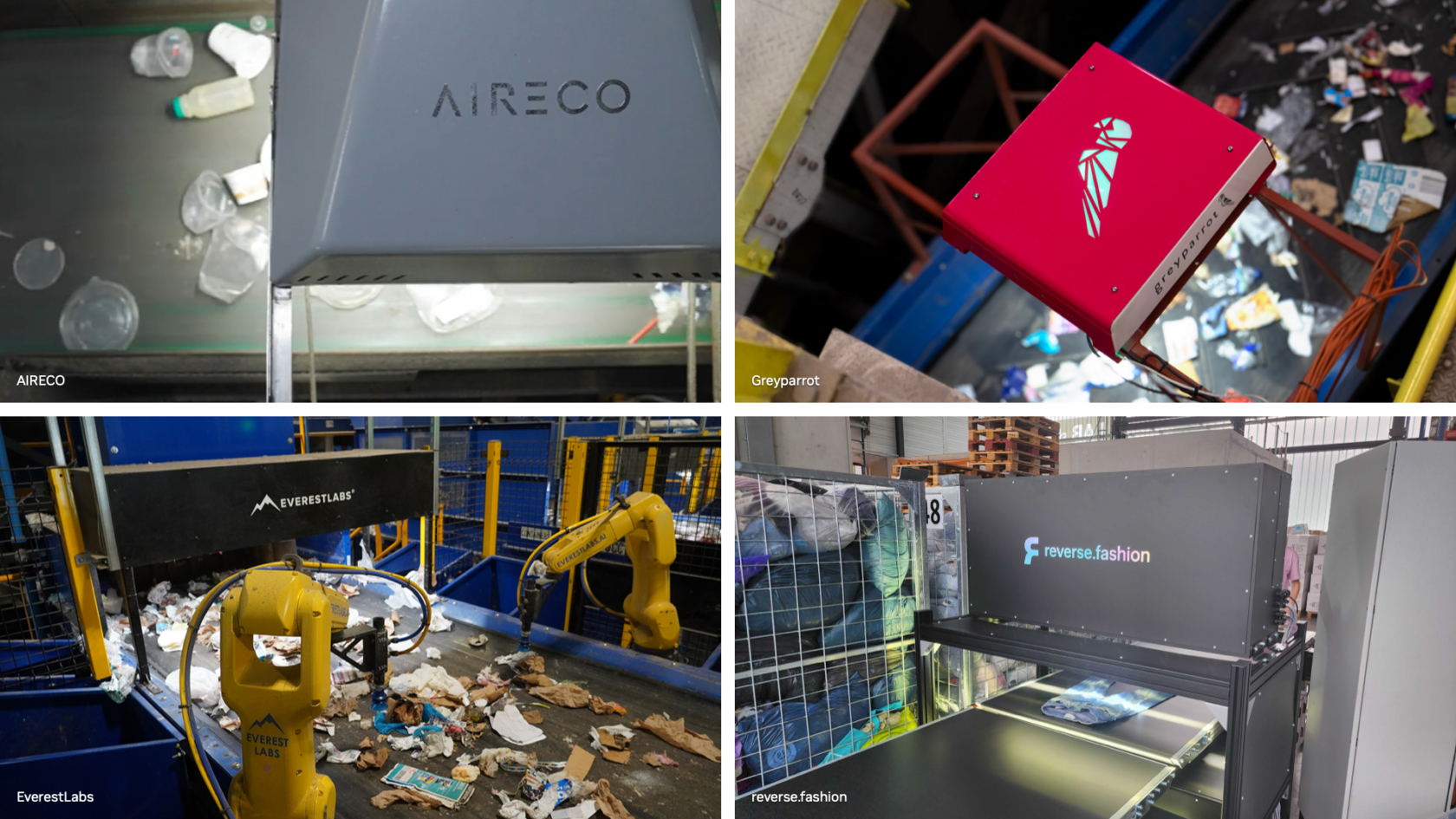
Image: NVIDIA
EverestLabs AI’s speed‑critical robots
U.S. startup EverestLabs AI deploys about 150 computer‑vision‑guided robots across North America and Australia. The robots run inference on NVIDIA RTX GPUs at the edge and train models on NVIDIA data‑center GPUs.
The company says its fleet has identified roughly 40 billion objects, recycled about 25,000 tons of material and avoided 30,000 metric tons of CO₂. Their agents also capture metadata on brand and packaging, a feature that could help small brands track how their products are being recovered.
Greyparrot’s real‑time belt analytics
U.K. firm Greyparrot built the Analyzer platform to mount above conveyor belts moving up to 4 m s⁻¹. Using NVIDIA GPUs for training and Jetson modules for edge detection, the system has logged over a trillion bounding‑box detections.
It reduces the time to check 15 tons of waste from 375 hours to six, delivering efficiency gains of 10 %‑30 %. Global packagers such as Amcor report a 12 % rise in food‑grade plastic yield, and brands like Coca‑Cola can now measure how much of their packaging actually gets recycled.
- Covers >300 Analyzer installations in 20+ countries
- Works in dusty, low‑light conditions
- Provides brand‑level recycling data
reverse.fashion automates textile sorting
Europe discards nearly 7 million tons of textiles each year, with only a fraction sorted by hand. Berlin‑based reverse.fashion uses high‑resolution computer vision to identify garment type and defects, speeding up a process that has traditionally been slow and costly.
What’s next for AI in recycling
The startups show clear gains, but scaling to the billions of tons of waste still needed remains an open challenge.
Sources
This post is based on NVIDIA.
Want more AI news in plain English? Read the latest on the Zoetra Blog.