Amplitude cuts product rollout time to days with OpenAI’s Wave
Amplitude announced on 12 November 2026 that its new proactive product agent, Wave, can ship product improvements in 1–2 days. The system leans heavily on OpenAI models such as GPT‑6.1 Sol, GPT‑6 Luna and GPT‑Image‑2.5 Flare. Early tests show a 160% lift in engagement with personalised suggestion cards.
How Wave works
Teams feed Wave a product area, goals and key metrics. The agent pulls together Amplitude data, session replays, customer feedback and existing code. It then spots opportunities, drafts a technical plan and hands the work to coding agents like Codex. After deployment, Wave tracks the outcome and feeds the learning back into the next cycle.
- Identifies and prioritises opportunities
- Creates implementation plans with acceptance criteria
- Coordinates with coding agents for rapid rollout
- Measures impact and iterates
Image: OpenAI
Model mix cuts cost and latency
Amplitude matches each task to a model that fits its demands. Deep investigations use GPT‑6.1 Sol, which scored 4.06/5 on Amplitude’s criteria and cost $1.34 per dispatch. Repetitive checks run on GPT‑6 Luna to keep latency low. Visual mockups come from GPT‑Image‑2.5 Flare, which outperformed a rival model (80.3 vs 63.9 on a wireframe score).
Real‑world impact on the homepage
In a test on Amplitude’s own homepage, generic suggestion cards were ignored by most users. Wave personalised the cards with recent charts and page context, then sent the change to a coding agent. One day after the A/B test, messages sent through the cards rose 160% compared with the control group.
- 100 session replays showed 80 users typed their own queries
- Personalised cards increased send volume by 160% after one day
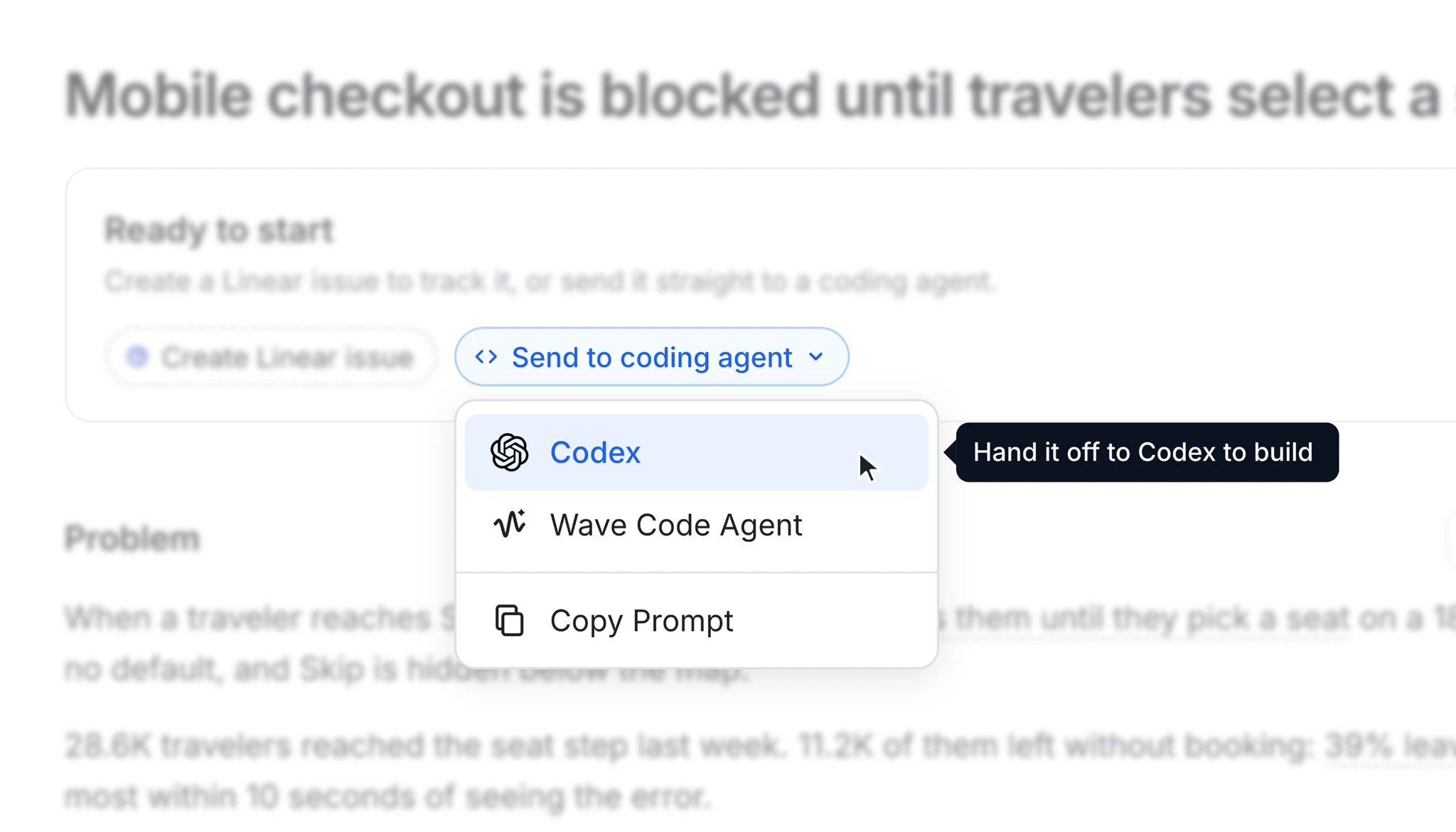
Image: OpenAI
Open questions
Amplitude is still in beta with Wave, so broader adoption data are limited. It’s not yet clear how the approach scales for extremely large codebases or highly regulated industries. Those gaps leave room for further testing.
Sources
This post is based on OpenAI.
Want more AI news in plain English? Read the latest on the Zoetra Blog.