Google expands Gemini Intelligence to new phones while unveiling Gemini 4 Carbon model
On 10 November 2026 Google announced two big moves. Gemini Intelligence, its Android‑focused AI suite, is now on the Pixel 10 lineup and the new Motorola Signature 27. The same day it rolled out Gemini 4 Carbon, the company’s strongest model yet, with a “swarm” agent capability for complex tasks.
Gemini Intelligence reaches more Android phones
The Pixel 10, Pixel 10 Pro XL and Pixel 10 Pro Fold all receive the latest Gemini Intelligence features, including real‑time spoken‑to‑text with Rambler and task automation across apps.
Motorola’s first Gemini‑enabled handset, the Signature 27, is now available for pre‑order in the United States from 19 November.
- Rambler turns spoken thoughts into clean text instantly.
- Task automation can order food, hail rides or book reservations in the UK, India and Japan.

Image: Google
New widget builder and device assistance
Create My Widget lets users design custom home‑screen widgets with a plain‑language prompt – no coding needed. It can pull data from Gmail, Calendar and Search.
Device Assistance lets you ask Gemini to clear space, check app permissions or mute distractions, acting as a personal device expert.
Gemini 4 Carbon and the swarm agent preview
Google’s Gemini 4 Carbon is billed as its “strongest model” and is aimed at tasks that push a model’s intelligence, such as multi‑step coding and open‑ended scientific research.
A preview of a “swarm” feature on the Antigravity platform will let a single prompt generate a coordinated team of agents, highlighting Carbon’s suitability for long‑horizon work.
- Available today via Gemini API in Google AI Studio and Gemini for Business for paying developers and enterprises.
- Also accessible to Google AI Ultra subscribers in the Gemini app, AI Mode in Search and on Antigravity.
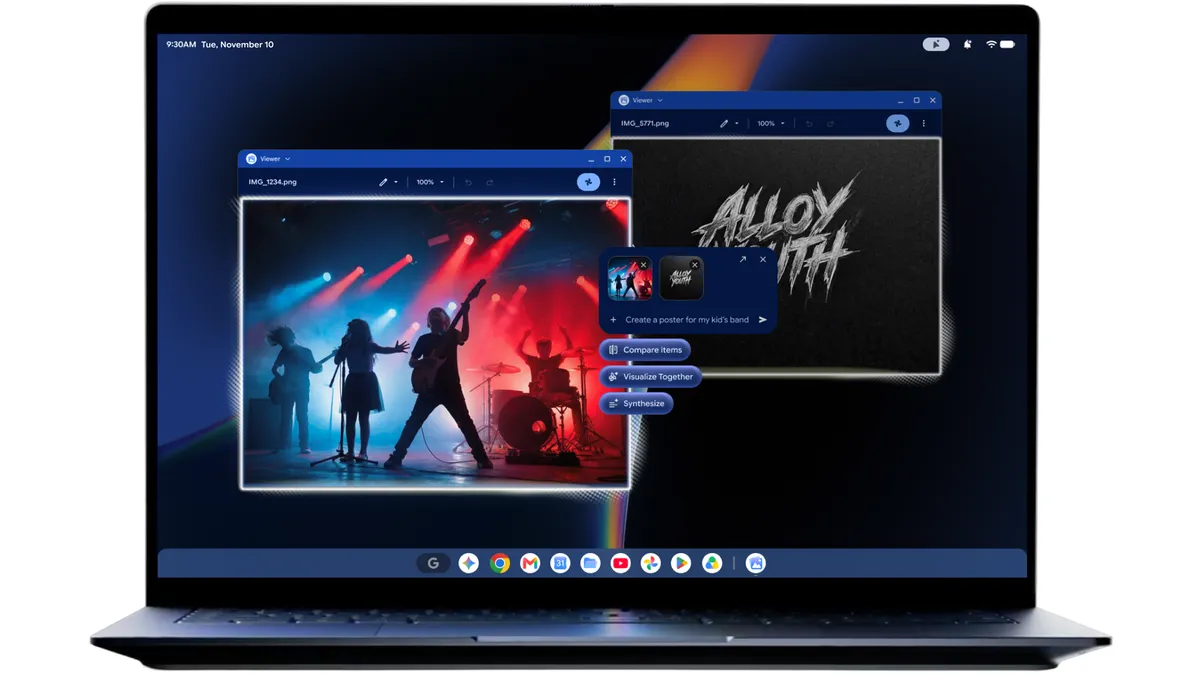
Image: Google
Pricing and competitive positioning
Carbon launches with an introductory price of $2 per million input tokens and $10 per million output tokens – about a fifth of OpenAI’s GPT‑6 Astra and a quarter of Anthropic’s Fable 5.2.
Even after the introductory period ends at the end of November, the per‑token cost remains lower than the frontier rivals, though actual expense will depend on token usage.
What this means for creators and small businesses
Creators can now build on‑device AI tools like custom widgets and real‑time transcription without writing code, freeing time for content creation.
Small businesses gaining access to Carbon’s high‑capacity model may automate complex workflows, from multi‑step data analysis to generating technical documentation, at a relatively modest token price.
Looking ahead
Whether Carbon will open up to free users remains unclear, and we’ll be watching for broader availability of the swarm feature across more Google services.
Sources
This post is based on Google, The Verge.
Want more AI news in plain English? Read the latest on the Zoetra Blog.