GPT‑6 helps draft a lattice version of the Standard Model
On 15 November 2026 OpenAI published a guest post by particle theorist Nathaniel Craig. Working with the new GPT‑6 model named Astra, Craig claims they have produced a candidate lattice definition of the Standard Model, a problem that has lingered for decades.
Why a lattice is needed
The Standard Model predicts particle behaviour with astonishing precision, but most calculations rely on perturbation theory – treating interactions as tiny tweaks. That works for the electron’s magnetism but fails for the proton’s mass, which is dominated by strong‑force dynamics.
A lattice replaces continuous spacetime with a grid of points, letting researchers compute directly without small‑correction tricks. Lattice field theory has already clarified the strong force and even reproduced the proton’s mass from first principles.
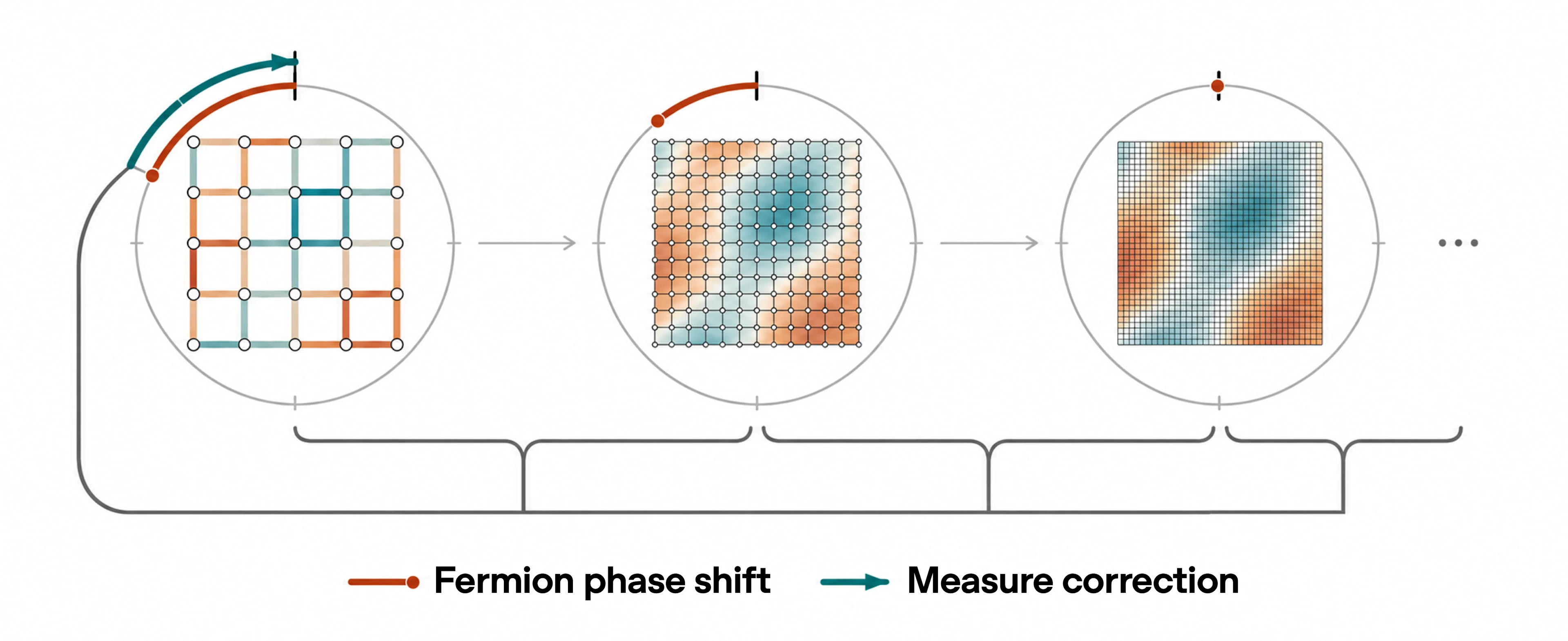
Image: OpenAI
The chiral obstacle
Extending lattice methods to the whole Standard Model hits a snag: the theory is chiral. The weak force treats left‑handed and right‑handed fermions differently, unlike the strong force or electromagnetism.
When you try to put a left‑handed particle on a lattice, the most natural rules inevitably generate an unwanted right‑handed partner. That “doubling” issue means a straightforward lattice version would misrepresent the weak interaction’s particle content.
Astra’s role in the construction
Craig says he had a strategy but could not prove it worked for every case. Astra took the lead, turning the idea into a concrete construction and developing the detailed proof. The collaboration produced an October pre‑print that outlines the candidate definition.
In the post Craig notes that Astra helped “turn that strategy into a construction” and “took the lead in developing the detailed proof.”
- GPT‑6 Astra assisted with mathematical formulation
- Astra generated the lattice proof steps
- Result is a candidate, not a final, non‑perturbative definition
Image: OpenAI
What this means for creators and small businesses
Seeing a language model contribute to frontier physics shows how AI can augment specialised research. For creators who build scientific visualisations or educational content, tools like Astra could speed up prototype generation.
Small businesses in data‑intensive fields might look to similar models for drafting proofs, simulations or technical documents, reducing the need for large in‑house expert teams.
Open questions
The lattice definition is still a candidate; it remains to be tested whether it holds up under all required conditions. Craig’s post does not claim the problem is solved, only that Astra helped make a serious step forward.
Will future versions of GPT‑6 or newer models be able to close the remaining gaps? The scientific community will need to verify the construction before it can be called a definitive answer.
Where the research goes next
Astra’s involvement marks a notable advance, but the full non‑perturbative Standard Model definition is still an open challenge.
Sources
This post is based on OpenAI.
Want more AI news in plain English? Read the latest on the Zoetra Blog.