NVIDIA adds quantum‑processor support to Slurm for supercomputers
NVIDIA announced on 16 November that Slurm 26.11 will add built‑in support for quantum processors. The update targets the roughly 30 supercomputing centres that are already deploying over 50 QPUs worldwide.
Why the new support matters
Until now each centre had to write custom code whenever a new QPU arrived. By reusing QRMI and QDMI interfaces, Slurm lets QPU builders use a single file to describe their hardware. That means a scientist can submit a quantum job the same way they submit a GPU job.
For creators of scientific software, the change removes a whole layer of friction. You can focus on the algorithm, not on plumbing between schedulers.
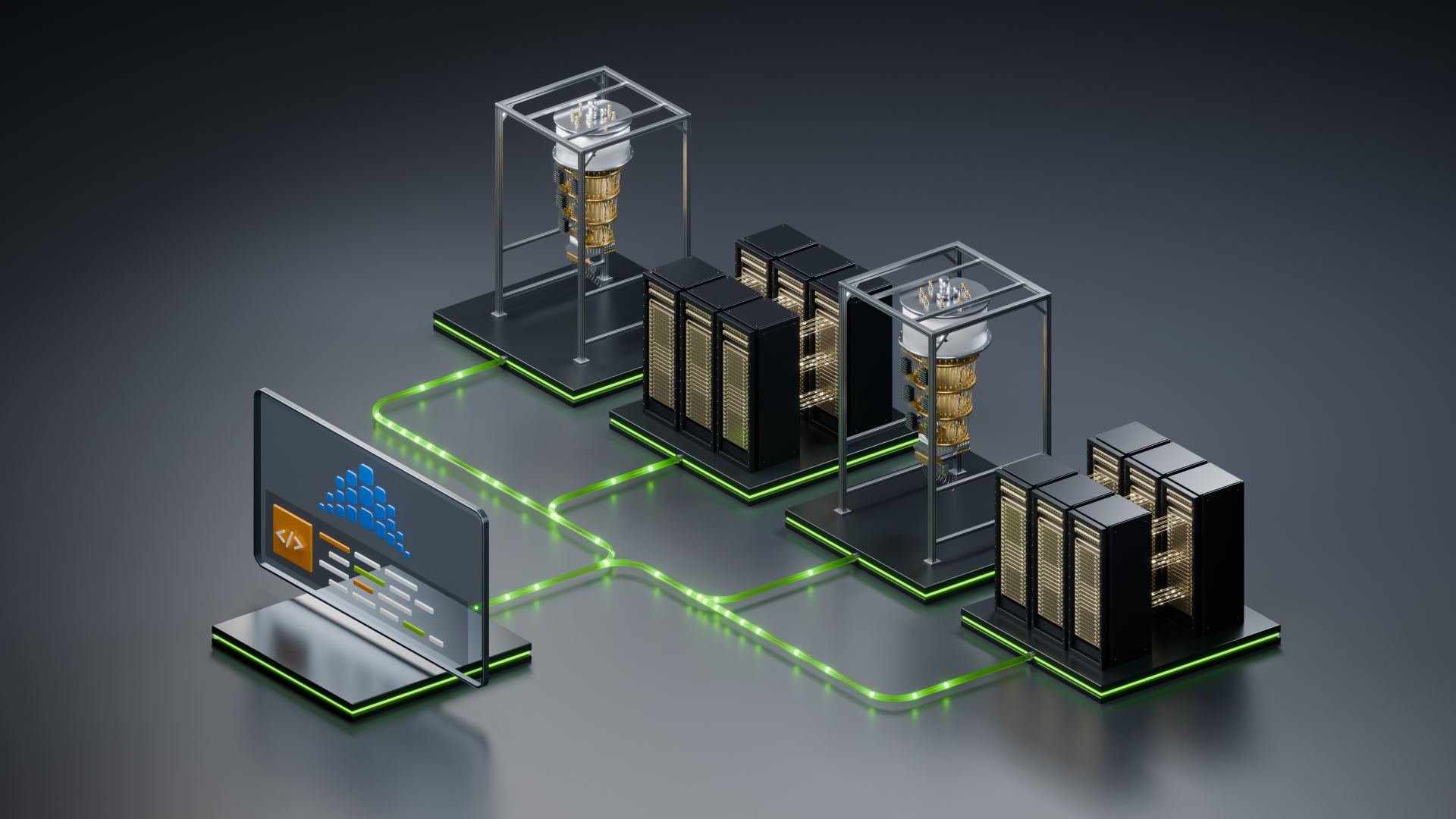
Image: NVIDIA
Who is already on board
The expansion is being adopted by Alice & Bob, IBM, IQM, Pasqal, Quantinuum and MQSC. All of these groups already expose QRMI or QDMI, so they can plug into Slurm without extra development.
What the broader CUDA‑Q platform offers
Slurm sits inside NVIDIA’s open quantum‑GPU ecosystem centred on CUDA‑Q. New CUDA‑Q features announced at SC26 include:
CUDA‑Q QEC with a decoder that is 13,000 × faster than the industry standard, and fault‑tolerant primitives for realistic compilation.
CUDA‑Q Algorithms for chemistry and materials science, and CUDA‑Q Pulse for GPU‑accelerated qubit‑control pulse generation.
- Quantum Motion’s QUICHE chemistry framework now works with CUDA‑Q
- Altera and Oxford Quantum Circuits built an FPGA controller that links qubits to GPUs via NVQLink
Early performance highlights
At supercomputing scale, QunaSys used cuQuantum with 1,024 NVIDIA Hopper GPUs on the ABCI‑Q system to simulate more than 300 million quantum operations, achieving chemical accuracy for a four‑hydrogen‑atom model.
NVIDIA researchers ran JUPITER to simulate 104 qubits under realistic noise, testing fault‑tolerant designs before hardware exists.
What’s still unknown
Slurm 26.11 is scheduled for release later this month, but exact dates for broader rollout across all centres have not been disclosed. It remains to be seen how quickly smaller labs will adopt the new quantum‑ready scheduler.
Sources
This post is based on NVIDIA.
Want more AI news in plain English? Read the latest on the Zoetra Blog.