OpenAI’s Astra for Law tops legal AI benchmarks with far fewer hallucinations
On 17 November 2026 OpenAI announced an updated Astra for Law model configuration. The GPT‑6.2 Astra‑based system now leads multiple legal‑intelligence benchmarks and is offered to every ChatGPT Enterprise customer via the Trusted Access Program.
Benchmark wins and token efficiency
Astra for Law ranked first on Harvey’s LAB‑AA test, earning full credit on 20.8% of 120 assignments – about 59% more often than the next‑best non‑OpenAI model, Muse Wonder Full. It also produced roughly half the output tokens per assignment (about 64,000 vs 139,000), which can keep usage costs down for legal teams.
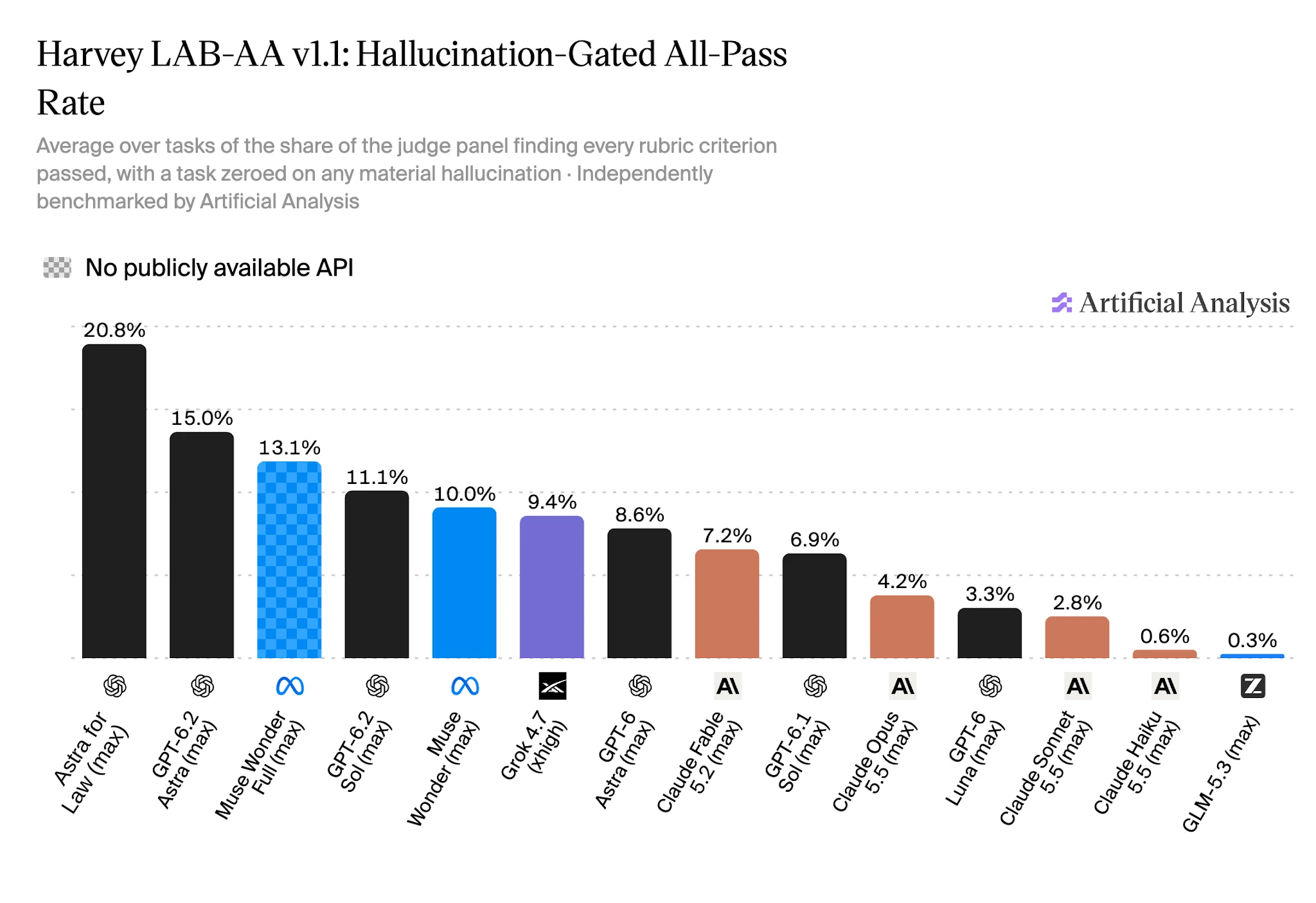
Image: OpenAI
Hallucination rates drop dramatically
In the same LAB‑AA comparison Astra for Law tied with GPT‑6 for the lowest material hallucination rate at 0.03 per assignment. That is roughly 20 times lower than Claude Opus 5.5’s 0.59 material hallucinations. Minor hallucinations were also far fewer (0.06 vs 0.51).
Improved performance on Vals AI’s Legal Research Bench
On Vals AI’s Legal Research Bench Astra for Law lifted its full‑credit score from about 46% in September to 53.8% in the November 16 evaluation – an eight‑point gain in under two months. Across all 208 questions it captured 90.9% of available points, including partial credit.
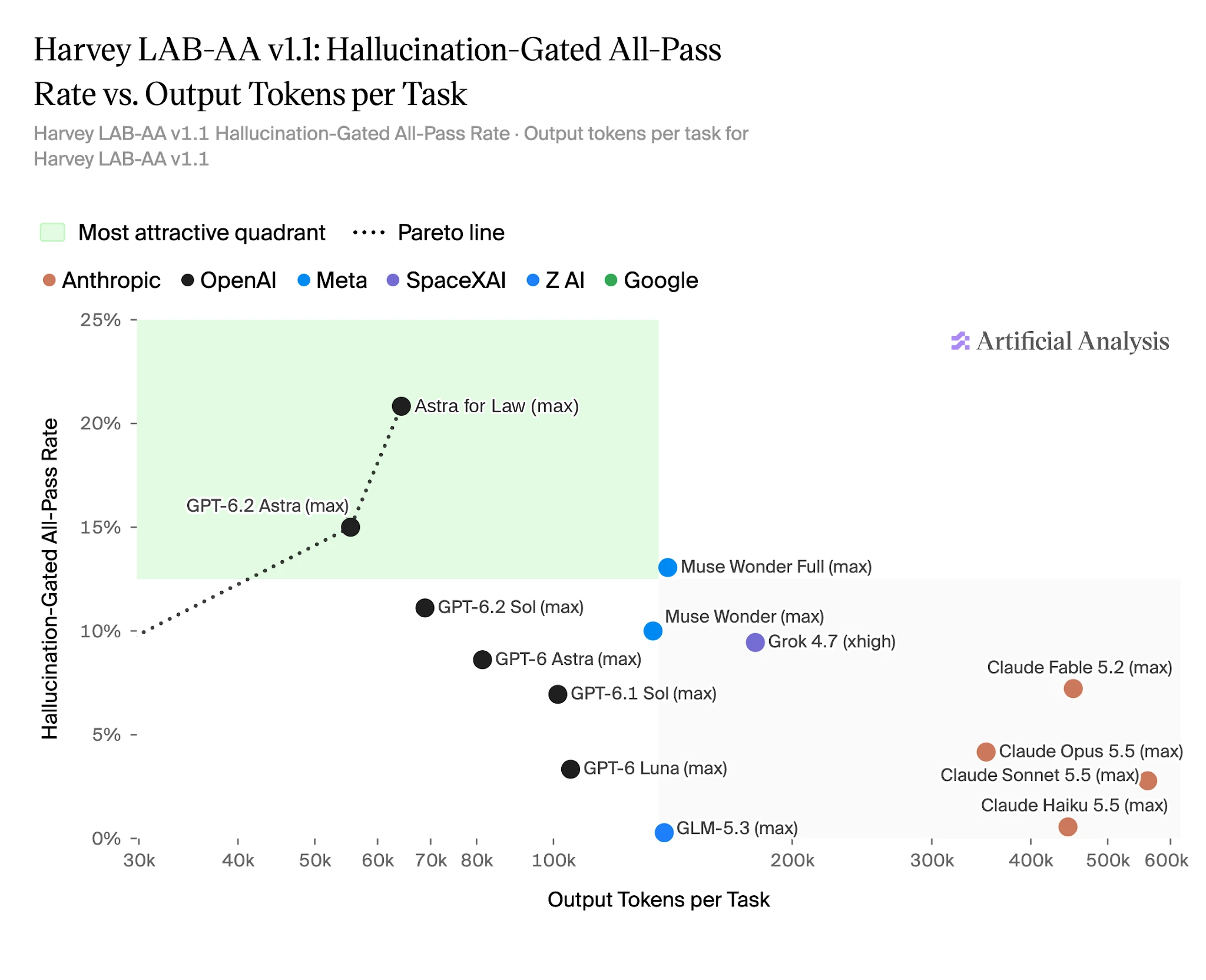
Image: OpenAI
Why this matters for creators and small firms
Legal‑focused creators – from contract‑writing SaaS tools to boutique law firms – can now tap a model that reduces costly hallucinations and uses fewer tokens, meaning more predictable pricing. The broader availability through ChatGPT Enterprise removes the earlier wait‑list barrier.
- Lower hallucination risk protects client trust
- Fewer tokens = tighter cost control
- Access via API enables integration into legal‑tech products
Open questions and next steps
OpenAI notes rapid innovations since the September launch, but it does not disclose future roadmap or pricing changes. How the model will perform on non‑U.S. jurisdictions remains unclear.
Looking ahead
Astra for Law’s benchmark dominance and cost‑friendly token use could reshape how small legal teams and AI‑powered creators handle research, yet its performance outside the tested U.S. scope still needs to be seen.
Sources
This post is based on OpenAI.
Want more AI news in plain English? Read the latest on the Zoetra Blog.