OpenAI slashes adversarial distillation success to near zero
On 20 November 2026 OpenAI announced fresh defenses against adversarial distillation, a technique that lets bad actors copy frontier AI capabilities without the original safeguards. The company says its updated stack drove attack success rates down to 0.2% in internal red‑team tests.
Why distillation matters
Distillation lets one model learn from another’s outputs, reasoning steps or judgments. While useful, it also opens a backdoor for copying powerful abilities without the safety layers the teacher model carries. OpenAI warns that this is especially risky in dual‑use fields like cybersecurity and biology.
- Unauthorized copying could let a weaker model provide advice the original would refuse.
- Exact reasoning traces contain more detail than final answers, making them prime training material.
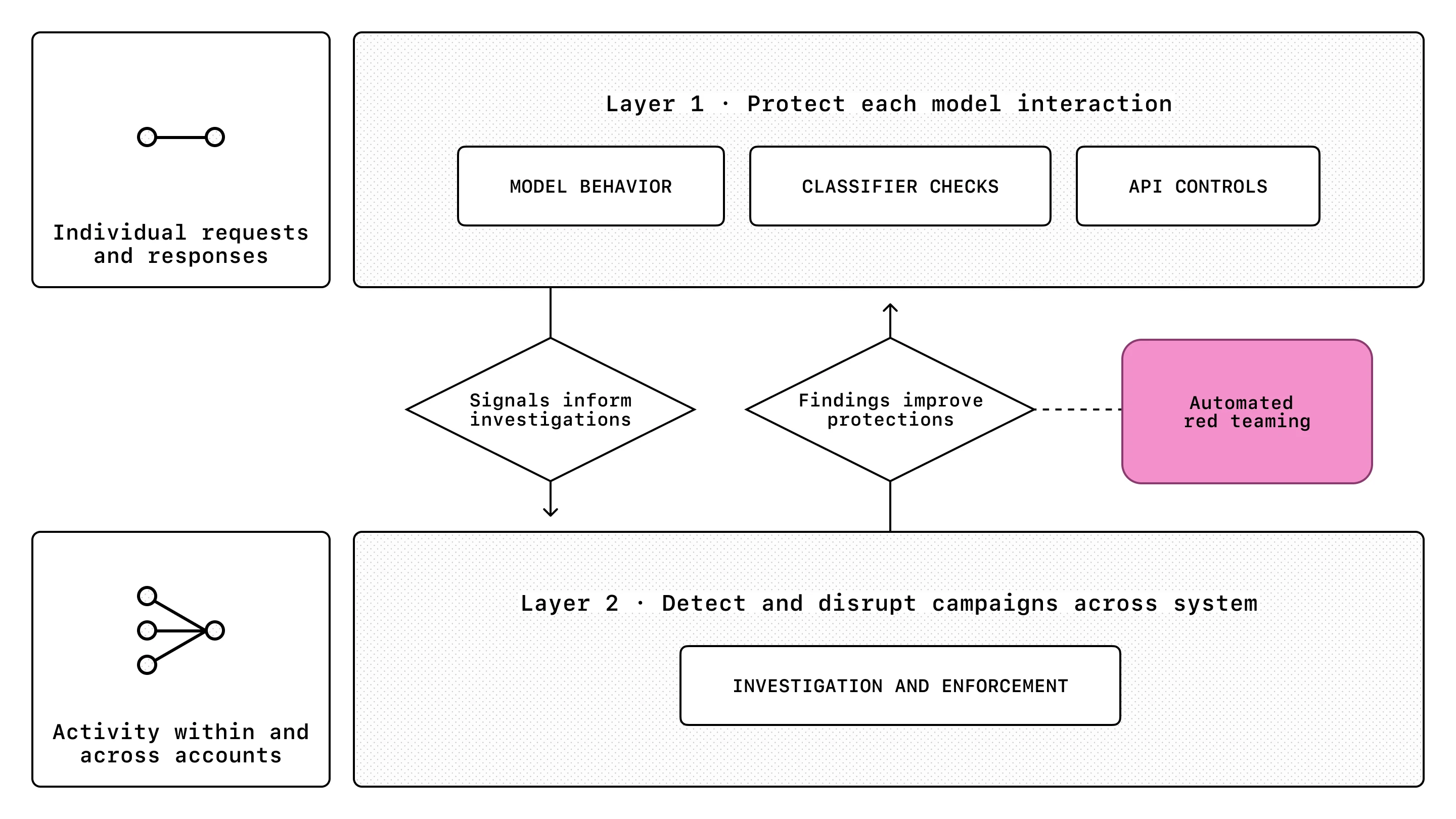
Image: OpenAI
New defensive layers
OpenAI’s approach now works on two fronts. At the request level, model behaviour, classifier checks and API controls aim to stop extraction of protected reasoning. At the campaign level, patterns across requests and accounts flag coordinated attempts.
Results from internal testing
In an adaptive evaluation using strong automated red‑teaming, the success rate for extracting protected reasoning fell from 54.0% against the earlier GPT‑6 Astra to just 0.2% against the updated GPT‑6.2 Astra. The test measured whether attackers could recover chain‑of‑thought traces while the model answered a prompt.
Open questions
OpenAI notes it will keep studying how much capability transfers across different student models and training recipes. The exact impact on other domains, such as biology, remains to be seen.
What to watch next
The new defenses dramatically curb adversarial distillation, but ongoing research will reveal whether similar safeguards can protect all high‑risk use cases.
Sources
This post is based on OpenAI.
Want more AI news in plain English? Read the latest on the Zoetra Blog.